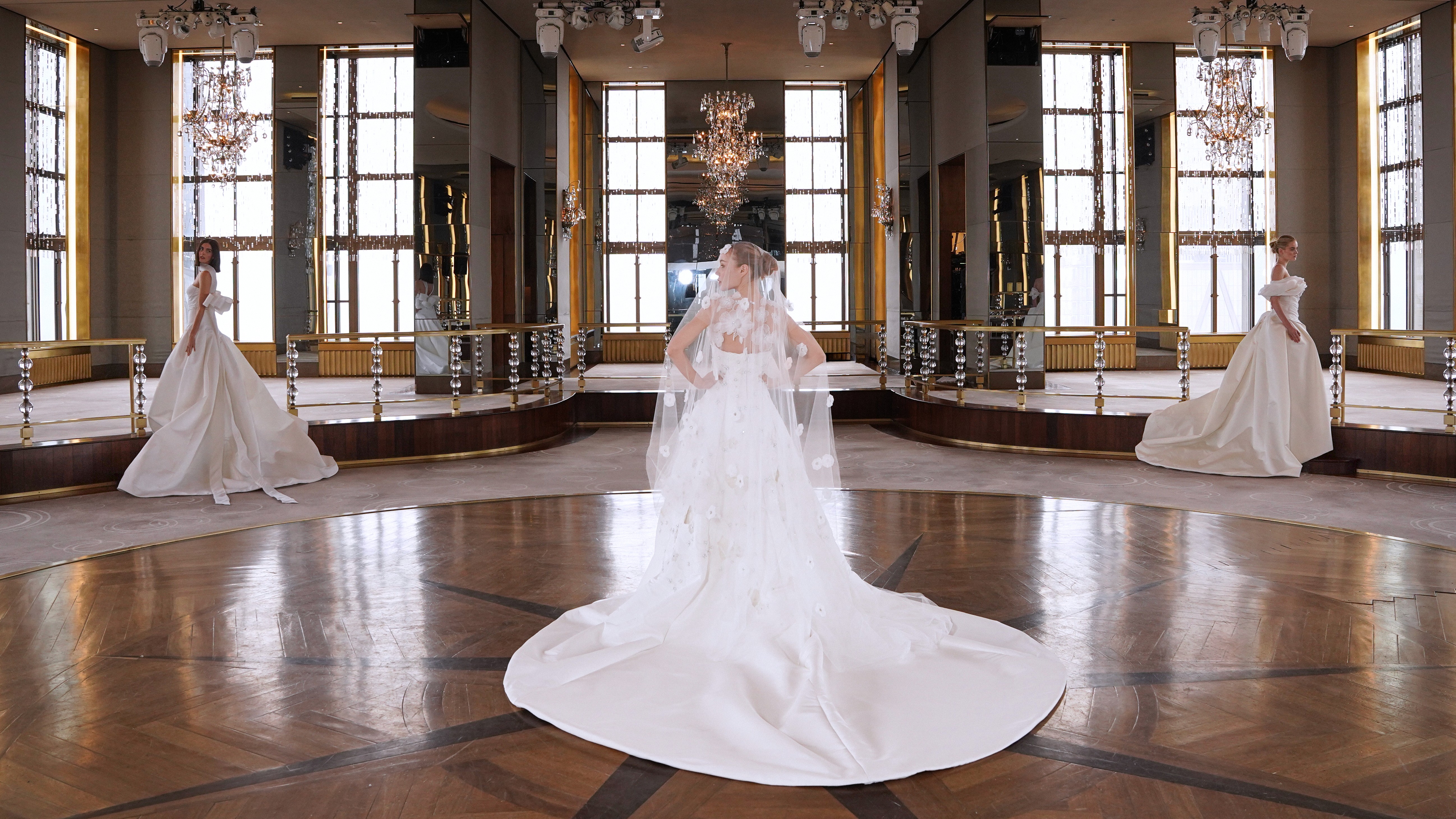
The Rainbow Room at That Hour
There's a version of a fashion show you've seen before. The runway. The lights. The music that drops right as the first model walks. The crowd in careful rows, phones up, trying to capture something that moves too fast to actually see.
The Nardos show at this year's New York Luxury Bridal Fashion Week wasn't that version.
The Rainbow Room sits on the 65th floor of 30 Rockefeller Plaza, and the city skyline does something to the space that no production budget can replicate. Panoramic windows lined the room, draped in crystals, and when the light caught them they threw refracted color across everything inside — including the gowns. White bridal fabric picking up shifting prismatic light against the Manhattan skyline below. It wasn't a lighting choice the production made. It was the building.
That's the kind of venue that chooses you as much as you choose it. Nardos understood what she was walking into and built a show that deserved the room.
She Painted a Design. In Front of Everyone.
Most designers at bridal week show you the finished thing. The final expression of months of work, presented in a few minutes, start to finish.
Nardos showed you the work.
Standing at a canvas, she painted one of her designs in front of the room. It wasn't a demonstration on the side. It was part of the show itself. The guests watched her make something in real time, the same process that produces the gowns, the same hand, the same eye, happening right there.
It reframed everything else in the room. When you've watched someone make a thing, the finished version of that thing means something different. The connection between the designer and the work became visible in a way that a traditional presentation format never allows.
The painting was auctioned off at the end of the show.
Then she dressed a mannequin in front of the guests. The draping, the adjustments, the decisions that happen between a designer and a garment and usually only exist behind closed doors. She made them public. The show was a sustained argument for why handcraft matters, and it made that argument by showing it rather than saying it.
The Models Weren't on a Runway
The models stood in the center of the room, on a rotating floor.
A rotating floor means every angle of every look is available to every person in the room simultaneously. There's no front row with a privileged view and a back row straining to see. The room becomes circular in a way that traditional runway formats don't allow, and the effect is that the collection feels like it exists in three dimensions rather than being presented in one direction.
With the crystal-draped windows and the skyline behind them, every turn the models made caught light differently. The rainbow effect the crystals threw across the white gowns shifted as the floor moved. It's the kind of thing you have to be in the room to fully understand, which is also exactly why coverage of a show like this matters.
It also changes what the camera has to do. A traditional runway gives you a clear sightline and a predictable path. A rotating presentation gives you choices. The choices you make about when to cut, when to stay wide, when to push in on a detail become part of how the final work reads. The show rewarded coverage that was paying attention.
What This Says About Bridal Fashion Week
Bridal fashion week has always carried more emotional weight than ready-to-wear. The collections aren't seasonal. They're tied to specific days in people's lives, and the designers who show at this level know the work they're presenting will be worn at moments that matter in ways most clothing never gets to.
What Nardos did at the Rainbow Room was make that visible in the format of the show itself. The live painting, the auction, the mannequin dressing, the rotating floor. All of it was saying the same thing. That a bridal gown isn't a product that appears fully formed. It's the result of a process, and the process is worth knowing.
That's a harder argument to make in a three-minute runway show. It's a much easier argument to make when the designer is standing in front of you with a paintbrush while you watch.
Covering a show like this is a different assignment than standard runway. We wrote about what bridal fashion week production actually requires if you want the full breakdown on what makes this format different. The Nardos show at the Rainbow Room was exactly that kind of production in practice.
You can see more of our fashion show coverage from events like this one.