
Video Production
A brand video can look perfect in the edit and fall apart the second you post it. One video can cover every platform, but one format can't. The verdict, and what to ask for before your next shoot.
Video Production
A brand video can look perfect in the edit and fall apart the second you post it. One video can cover every platform, but one format can't. The verdict, and what to ask for before your next shoot.

A brand video can look perfect in the edit and fall apart the second it's posted. Same file, but now the color's off, the motion's mushy, and the video you paid for looks cheap on a phone.
Nothing's wrong with the video. The platform reshaped it on the way up, the way they all do.
Most brands learn the verdict too late. One video can cover every platform, but one format can't. A single one-minute video often needs five or six versions to look right everywhere it goes..
A brief often lands with a line like "we just need something for social." Fair enough, it's shorthand everyone uses. But somewhere along the way, social picked up a reputation as the cheap lane, the quick ask you don't spend real money on.
For a lot of brands, social is the whole game. It's where the sales come from, where people find you, where the audience lives.
Treating it as the budget afterthought is backwards. And how people watch on social keeps shifting, which we got into in long-form brand content is having a moment.
Video files are huge, and getting bigger. A phone on its top-quality setting can burn through a gigabyte in seconds, and prosumer and cinema cameras multiply that from there. People shoot that way because it's what they paid for.
No platform serves a file like that to millions of phones, so every one shrinks it on upload. That shrinking is where the quality goes.
Each platform does it differently. Instagram compresses hard and wants vertical, so a wide video gets cropped or boxed in. TikTok wants full vertical too, and squeezes the file even more.
YouTube is the kindest to quality and handles horizontal best. LinkedIn compresses more than people expect and autoplays on mute, so it needs captions and a strong first second.
Websites are their own animal. A page has to load fast, so a heavy video makes the whole site crawl. The file has to be small and hosted the right way, or people leave before it plays.
Same master, five destinations, five different results. None of them the version you approved.
Two words explain most of it. Codec and bitrate.
Bitrate is how much data the video spends per second, so more data means more detail and a bigger file. Every platform sets a ceiling, and if your video lands above it, the platform knocks it down to fit. (This is the bit that quietly happens to your master while you're looking the other way.)
A codec is how the video gets packed. H.264 is the old reliable that plays on everything, but it's not the most efficient. H.265 fits the same quality into about half the size, which sounds like a free win, except plenty of platforms and older devices still don't play it cleanly.
It shakes out differently per platform. YouTube gives you the most room and mostly leaves a high-bitrate file alone. Instagram and TikTok run lower ceilings, so a heavy master takes the biggest hit there.
A website usually stays on H.264 with the bitrate kept low on purpose, because a smaller file is what keeps the page fast. (Newer codecs can shrink it further, as long as you leave a fallback for the browsers that shrug at them.)
So the pattern is simple. You upload your best, the platform re-packs it to its own budget, and the gap between the two is what your viewer sees.
If you're hands-on, you can beat the platform to the punch. HandBrake (free, open-source, and it holds up) and Adobe Media Encoder both let you shrink a file while keeping most of the quality, so you hand the platform something already near its target instead of a giant master it has to crush.
Fair warning, compression and creative choices don't always get along. Grain added for a cinematic look can turn to mush, and deep blacks and shadows can go blocky or banded. There's always a compromise, and the move is to pick it on purpose instead of letting the platform pick for you.
And yes, a small plug. Part of why we're building website design for brands is that a page we make is a clean home for content that already fits, because we make the content too. It won't fit every brand, but when it does, it's one less thing against your video.
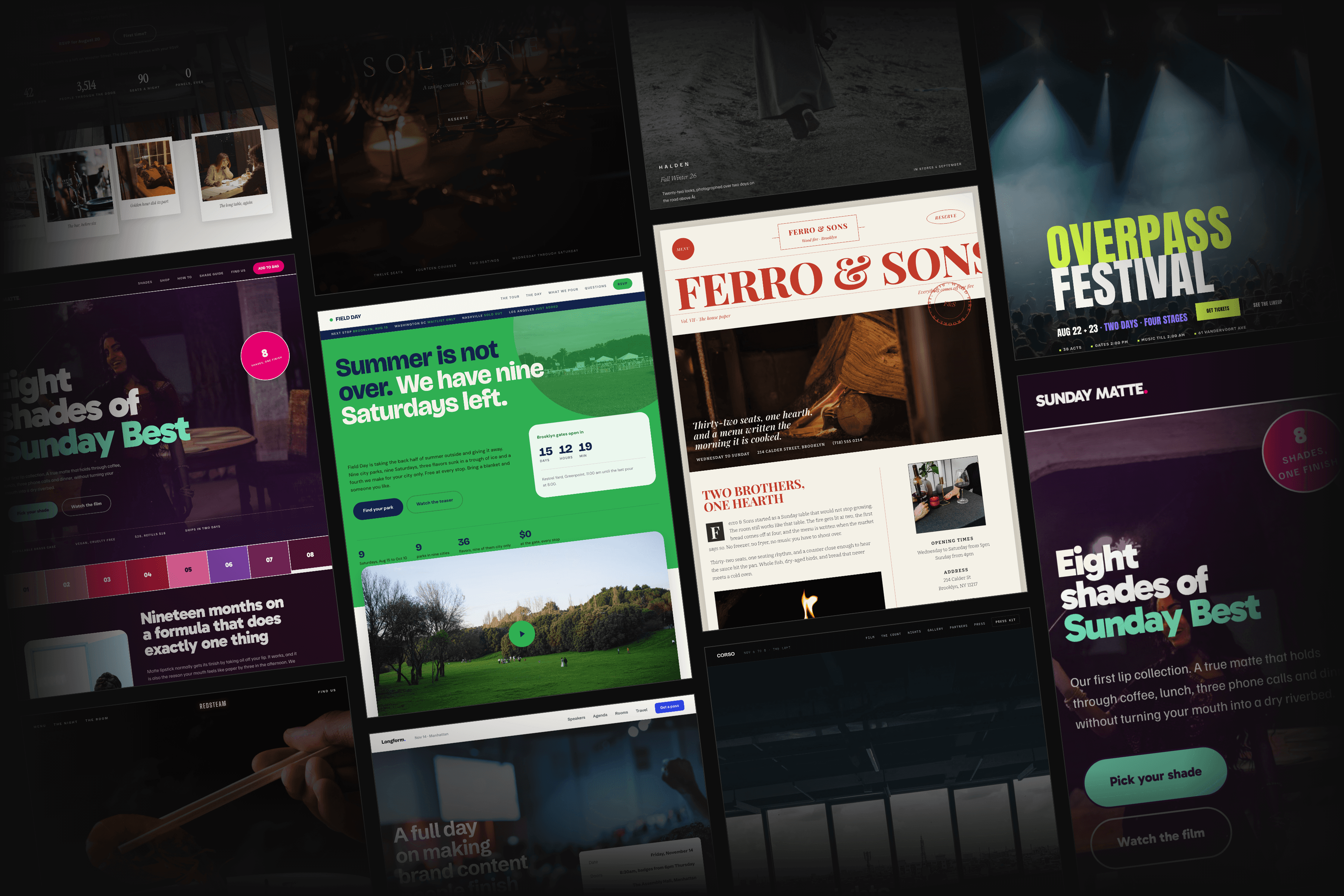
You review on your iPhone or your MacBook, on strong wifi (the office kind, not the train kind), and it looks great, so you sign off. But your audience is on Android, on old laptops, on weak wifi, all over the world, where compression bites hardest. You approve one video and they see another.
The old idea of a high-end video was how expensive it looked in the edit. That bar is out of date.
A video that looks rich in your folder and rough in the feed cost a lot and delivered a little. The real test now is whether it still looks right after the platform is done with it, on a stranger's phone.
Some content shrugs off the squeeze, like a talking head or a quick recap. But compression eats color, texture, and fine detail, which is a real problem for brands that sell exactly those things. For a clothing line or a makeup brand, the product ends up looking wrong, and fashion work gets no mercy from a compression pass.
Photos have it easier here, since stills get squeezed far more gently than video.
If you're posting a raw clip straight from your phone into the app, most of this doesn't apply. The app handles it, and the casual look is the point.
A produced brand video is a different job, and most brand jobs are. The more you put into the footage, the more the platform can take away if nobody planned for it.
The fix happens in the brief, before the camera rolls. You can't out-edit a platform, so you plan around it.
Decide the platforms first. Frame so a vertical cut and a horizontal cut both work. Then build a version tuned for each place it's going, plus a light one for the website.
One shoot can feed all of it, which we cover in one shoot day, 25 pieces of content.
Now the free tip. That one-minute video should come back as five or six formats, not one. Vertical for TikTok and Reels, square, horizontal for YouTube, a web-optimized cut, and a captioned version.
If your team isn't handing those over, ask for them. It costs a little more to make them, and it's the difference between paying for great content and getting people to see it.
Build for the feed. The only version that counts is the one your audience sees.
Raised Media Co. is a New York City visual production company. Video, photography, and web design, built for brands.